Drafted AI Startup Revolutionizes Custom Home Design with Affordable Plans | Ukraine news

Nick Donahue’s parents were involved in the home-building business, so his childhood was spent hearing about the American construction industry. His father built houses for major developers, and his mother sold them to large hardware chains on the East Coast.
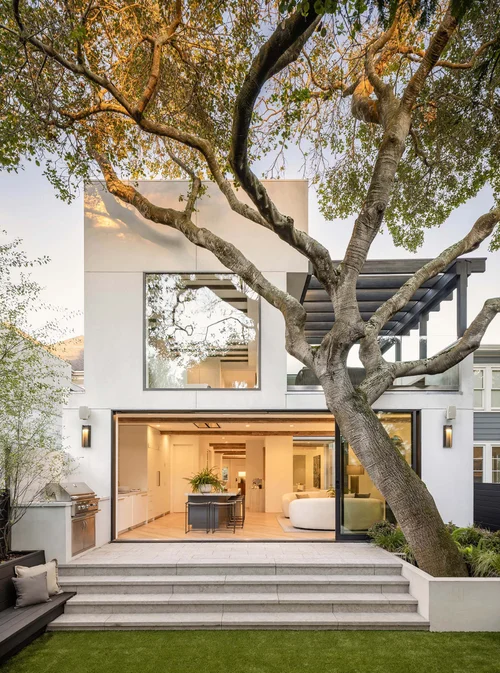
Donahue was always curious about why designing a custom home costs so much and drags on for years, and why most people settle for developers’ offerings each year. After finishing his studies at NC State and moving to the Golden Coast of California, he decided to change the approach to home design by founding his own company.
Atmos, a startup that came through Y Combinator, raised $20 million from investors, including Khosla Ventures and Sam Altman, and sought to use technology to simplify the process of designing custom homes. The team included in-house designers who worked with clients, while the backend was handled by software. The company grew to 40 people, generated about $7 million in revenue, and designed homes with a total value of around $200 million, having built 50 projects.
“This became an incredibly operational business,” he said during a video call last week. “Like a glamorous architectural firm.”
Why Atmos Couldn’t Fully Replace People
It sounded promising, but it soon became clear: the human factor would remain a key element of the process. After a sharp rise in Fed rates, clients who had been dreaming of a home for years suddenly could not afford to realize those plans. Nine months ago Atmos shut down.
Rather than stopping, Donahue regrouped and launched a new project – Drafted.
Drafted is now only five months in operation, but this is the approach Atmos didn’t have. There are no designers on staff. There is no complex operations line. Only artificial intelligence that generates residential plans and exterior options in minutes. You specify requirements – number of bedrooms, square footage, etc. – and the program outputs five options. If needed, new variants are created until a suitable concept is found.
TechCrunch event
San Francisco | October 13–15, 2026
Drafted currently has six employees, four from Atmos, and has raised $1.65 million after a round valued at $35 million from investors, including Bill Clerico, Patrick Collison of Stripe, Jack Altman, and Moody, a member of the band “Gori”.
“Nick, please take our money,” he kept saying for two weeks until Donahue agreed.
The housing design industry continues to outpace growth. Drafted offers a combination of custom design with competitive pricing on ready-made solutions, making custom design more affordable than traditional options. A full plan costs from $1,000 to $2,000.
The economic model is based on its own AI system, trained on real house plans that were built and permitted. Practical constraints are accounted for, and the specialized model is almost free: about $0.20 per floor plan, while the main AI costs about $0.13. Drafted primarily works with single-story homes, but expansion to multi-story and site-specific features is planned.
Will there be significant demand for such a product? According to data, out of a million new homes built each year in the United States, only 300,000 are custom-designed. Most people opt for ready-made solutions or offerings from large developers. Investors see this as the classic “chicken and egg” problem: make the custom design cheaper and faster, and demand will rise. Donahue compares it to Uber: an on-demand service could become a routine part of daily life, not just an alternative.
There are also questions about resilience and data security. Yet Donahue believes that the speed and convenience for customers could make Drafted a platform for those who want to design their own home at a reasonable price. The service is already open to the public and shows modest but steady growth – about a thousand daily users, which bodes well for a young product.
Donahue has what many entrepreneurs value – a deep understanding of the problem and experience from a previous launch. The Drafted team continues to develop the concept and move forward, keeping a focus on fast and affordable home design.
link