What Is Transitional Style? Everything to Know About This Versatile Design
:strip_icc()/farmhouse-style-large-kitchen-8a695644-ccd2bd367f9b4b50b63c6081c3777db1.jpg "What Is Transitional Style? Everything to Know About This Versatile Design")
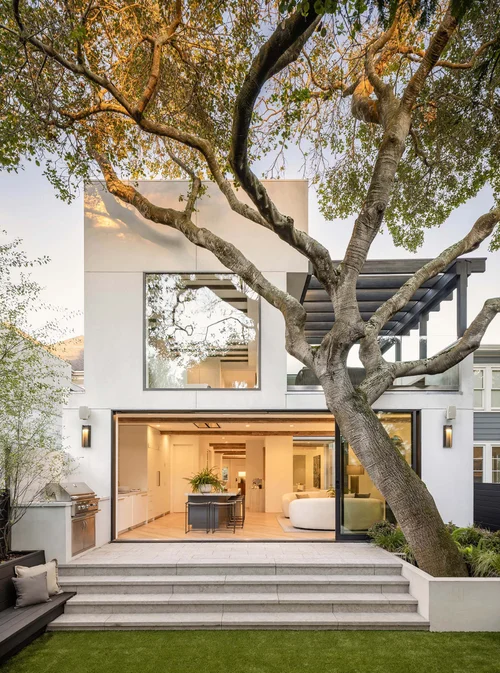
Transitional style blends the elegant charm of traditional design with the clean lines of modern style. It’s a flexible approach that adapts to a range of lifestyles and design preferences. This style lets you update your home with modern elements while retaining a timeless look, avoiding the need for frequent redesigns.
“Transitional design allows us to marry traditional with modern design in unexpected ways that look effortlessly timeless,” says Laura Umansky, founder and CEO of Laura U Design Collective. “The palettes are typically softer and more neutral than traditional styles, and the look is more layered than the minimalism of contemporary spaces.”
A backdrop that skews transitional allows existing furnishings or collected items to have room to shine without competing with their surroundings. Here, we break down all the defining characteristics of transitional style and share tips for decorating with the popular aesthetic.
Why Is Transitional Style So Popular?
Transitional style is popular due to its adaptability. It invites creative risks. “Because it lives in the middle of two extremes, transitional style balances softness and sophistication, masculine and feminine, and antiques with new pieces,” says Laura Umansky.
This blend of high and low elements makes it ideal for busy households. It offers a practical solution for families seeking a sophisticated yet livable space. “We are able to layer in large-scale furnishings in plush, high-performance, kid-friendly upholstery,” Umansky explains. With this style, a home can be fashioned with fewer boundaries and rules that constrain the design.
Elements of Transitional Style
Transitional style is versatile, showcasing various aesthetics. However, this design method implements several key elements that remain consistent, regardless of the accompanying features.
Neutral Color Palettes
A neutral color palette is core to the transitional style. “While a serene color palette is foundational for transitional style, we are also integrating a mix of moody elements,” says Laura Umansky. “The key here is to bring in a darker color palette in the tertiary areas, like a dark gray study or a deep blue prep kitchen.” Take advantage of small areas, such as powder baths or mudrooms, for playful, patterned wall coverings, a common feature in transitional interiors.
Mix of Textures
Transitional style typically features clean lines, but with a range of textures, the space displays personality and warmth. “We love using romantic curves and organic textures like natural oak, polished fossil, grass cloth, and white plaster to add visual interest to the space,” explains Laura Umansky. Like the old-money aesthetic, layering—whether with decorative items, textures, or silhouettes—is crucial for a transitional room that exudes personality.
Emphasis on Functionality
Transitional style values function above form. “While functional furnishings have always been a trait of transitional style, we are seeing the ask for separate sitting and conversation zones,” states Laura Umansky. “With clients spending more time at home, they need more seating and unique spaces to entertain guests.” As people spend more time at home, entertaining will require additional seating and specific spaces for gathering. Although functionality might seem to overshadow style, there are numerous ways to maintain an elegant look. “Beautiful formal sitting rooms to enjoy conversation with friends and handsome club chairs to enjoy cocktails—we are here for it,” she says.
Transitional Style Design Tips
An essential ingredient for making transitional style work in your home is the need for personalization. “Keep your base furnishings neutral and include modern textures, then add your personality on top of that,” she suggests. Start with a neutral base and experiment with tones, textures, and a mix of art, accessories, and soft goods. “A traditional wallcovering paired with abstract art (or an abstract wallcovering paired with a traditional landscape) works well to achieve the transitional style,” she explains.
Let your home evolve over time with decor that speaks to you. “You have the freedom to incorporate pieces from different design periods as well as your personal art collection to create an interior design that’s truly unique to you,” comments Umansky. “That being said, layering is highly important to pulling it off. Fabrics like suede, chenille, and leather are a great place to start in lighter hues, allowing you to layer in pops of color, mixed metals, or, my personal favorite, oversized, statement lighting.”
The combining of timeless elements with modern styles can either be bold or subtle to master transitional design. The particular perk of this style is in its lack of strict rules; you can choose any traditional-to-new ratio that suits your home and personal taste. Decide on what’s best for your space and lifestyle, and you’ll craft a cohesive transitional environment.
link